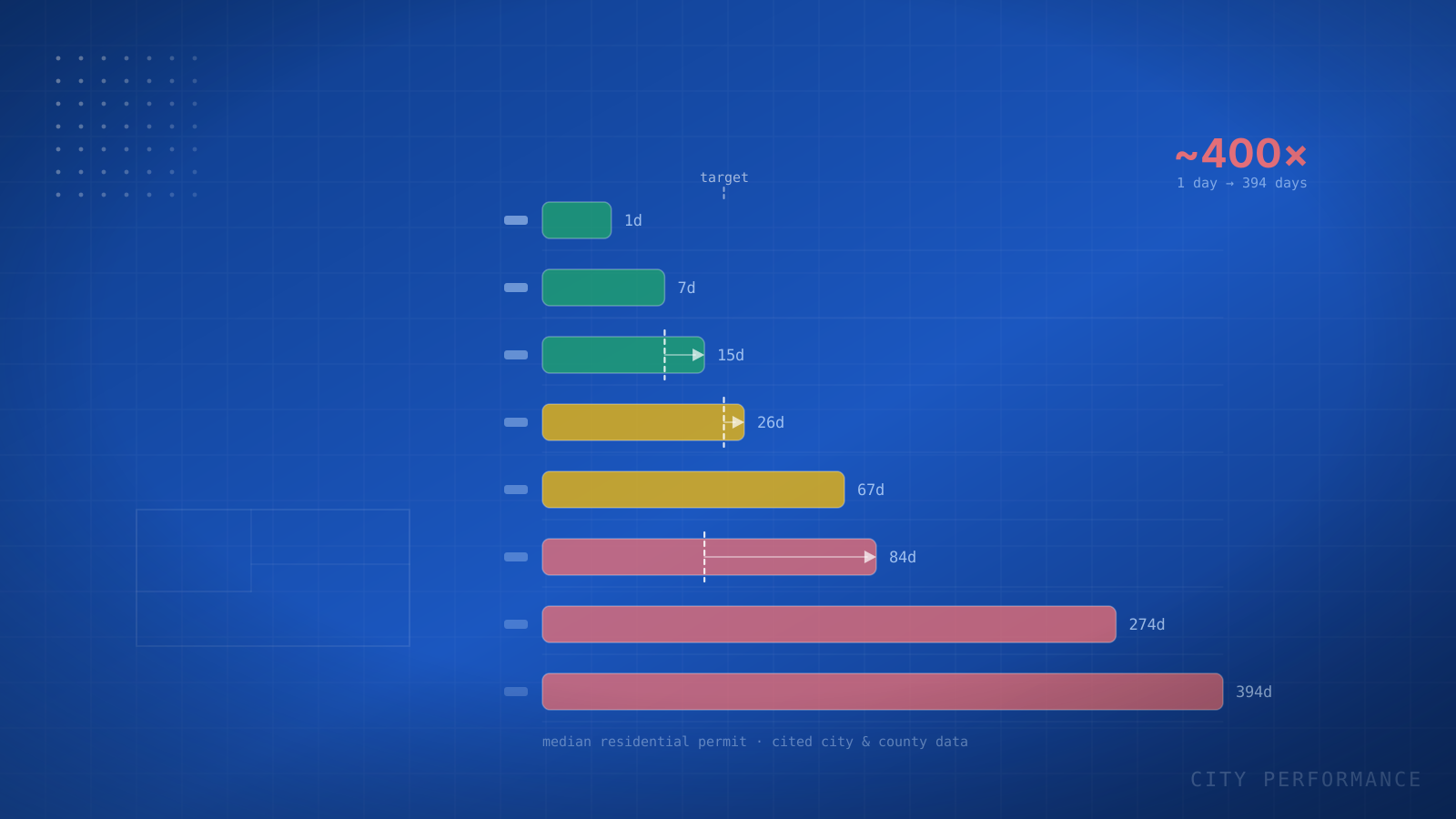
What states promise, cities deliver, is a different story. Across the U.S. cities and counties that publish or have been audited on real numbers, the median time to issue a residential building permit runs from about 1 day to nearly 400. Where you build matters more than any single rule, and the completeness of the application is the biggest lever on the lived timeline.
This is Part 2 of The Permitting Map. Part 1 mapped what each state's law promises; here we look at what 118 cities and counties actually deliver, every figure linked to a Permittable permit guide cited to the official record.
Key takeaways
- Measured residential-permit medians range from about 1 day (Cleveland) to nearly 400 (Honolulu), a gap driven by where you build, not by whether the state has a deadline.
- Fastest measured: Cleveland ~1 day, Richmond ~5, Fort Worth and Helena ~7. Slowest single-family medians: Honolulu ~394, Maui County ~379.
- Targets and reality diverge: Houston ~31 days against a 10-day target; Anaheim ~84 against a 10-to-20-day target, because the target measures one cycle and the lived number includes every resubmittal.
- Six structural patterns, not the statute, set the timeline: completeness intake, discretionary review, resubmittals, environmental overlays, staffing, and authority structure.
- Only about 41 of 118 jurisdictions publish or have been audited on a real outcome. Most of the country cannot tell you how slow it is.
How long does a building permit take? The spread runs 1 day to nearly 400
We pulled every city and county guide that cites a measured outcome and normalized the comparable figures to rough calendar days. On the cleanest like-for-like measure, the median time to issue a standard residential permit, the range is staggering.
The fast end is genuinely fast: Cleveland at about a day, Richmond about five, Fort Worth and Helena about seven, Milwaukee and Hartford about two weeks. The slow end is dominated by Hawaii, where Honolulu and Maui County run a single-family median near a year, and by large California metros such as San Francisco. Hawaii is no accident: it was one of the high-burden states in Part 1, and its counties show why.
A word on honesty, because it matters for how you read the chart. A few jurisdictions report a deliberately different metric and should be read in their own lane, not ranked against a single-family median.
Promise versus reality: do the targets hold?
The most revealing view pairs a jurisdiction's own stated target against what it actually does. Both directions show up, which is what makes the data credible.
Some places beat their target: Las Vegas runs about 19 days against a 21-day goal, Helena about 7 against Montana's 10-working-day cap, Phoenix about 35 against a 45-day goal. Many miss it, sometimes badly: Houston about 31 days against a 10-day target, Baton Rouge about 15 against a 7-day target. Anaheim is the cleanest case in the whole analysis: a median near 84 days computed from the city's own open permit data, against a posted 10-to-20-day review target. It dwarfs the target because the target measures one review cycle while the lived number includes every resubmittal.
Why do building permits take so long? Six structural causes
Read across all 118 city and county guides and the same six friction patterns appear again and again. They, not the statute, set the timeline.
- The completeness gatekeeper. Almost every statutory clock starts only after an application is deemed complete, so intake screening, where applications bounce for missing items, never starts the clock.
- Discretionary review outside the clock. Historic and design boards run on their own hearing calendars, from Miami Beach's preservation and design boards to Palo Alto's architectural review to Philadelphia's roughly six-month zoning-board wait.
- Resubmittal and correction cycles. The gap between a one-cycle target and the multi-cycle reality is the resubmittal tax, and Anaheim is the worked example.
- Environmental and disaster overlays. Hazard rules add parallel approvals the permit clock does not cover, like Scottsdale's desert-preservation regime, Naples and the FEMA 50-percent flood rule, and Colorado Springs's wildfire and expansive-soil reviews.
- Capacity and staffing. Where examiners cannot be retained, the queue lengthens; Durham extended its site-plan review from 20 to 30 days in 2024 and said plainly it was staffing.
- Structural authority quirks. The shape of the authority shapes the timeline: Colorado Springs uses a regional authority for eight jurisdictions, and Fairfax County is a heavyweight county department processing enormous volume.
The finding hiding in plain sight: almost no one measures
Here is the result that should change the conversation. Of the 118 city and county guides, only about 41 publish or have been audited on a real, measurable outcome. The rest, more than half, publish a target or describe a process but no actuals at all.
You cannot benchmark against a number that does not exist, and most of the country does not produce one. The handful that do, like Anaheim, Fairfax County, Hartford, and Baton Rouge, are the only places where promise and reality can even be compared.
What this means for builders
A statutory deadline is a floor for the wrong thing: it governs one review cycle of the building permit, not intake, not discretionary review, and not your resubmittals, which is where the time actually goes. The lever that moves the lived timeline is completeness, because every pattern above compounds when an application arrives incomplete. And measurement is the prerequisite for improvement: the markets that beat their targets are, almost without exception, the ones that measure themselves.
That is why this permit guide directory exists, and why Permittable does. The fastest way to close the gap between the permit on paper and the permit in practice is an intake completeness check and a pre-submittal permit review that make the package complete before it ever reaches the counter, so the clock the statute promises actually starts. Read Part 1: the 50-state map of permitting regimes for what the law promises before the city ever opens your file.